Our Blog

Retaining That New Smile

June 22nd, 2023

For months and months, you’ve been dedicated to following your orthodontic treatment plan. Wearing your bands or putting in the hours with your aligners. Eating orthodontic-friendly foods. Seeing your orthodontist on a regular basis.

But that’s all in the past. Today, your braces are coming off! You’ve finished with your last set of clear aligners! Now it’s time to enjoy your accomplishment and celebrate this moment.

And after you’ve celebrated the moment, what’s next? Why, it’s time to look to the future! Because one thing we can predict for the years ahead is that you’ll want to keep your smile looking as wonderful as it does today. Let’s look at some of the simple steps you can take to retain that new smile.

Keep Up With Your Brushing and Flossing

Wearing braces or aligners meant learning a whole new way to take care of your teeth and gums. You used special tools to clean around your brackets and wires. You learned how to keep your aligners clean and stain-free. You brushed and flossed after every meal and snack break.

So returning to regular hygiene habits should be a cinch—two minutes of thorough brushing at least twice a day, with careful flossing at least once each day. And you’ll probably notice something else which makes your life easier—properly aligned teeth are easier to brush and floss effectively.

But just because it’s easier, doesn’t mean it’s not as important. Keeping your teeth clean and cavity-free and your gums healthy will keep your smile looking its best, so be sure to brush and floss just as consistently as you did when you were in treatment.

See Your Dentist Regularly

Even though you won’t be making regular visits to our Parker or Aurora, CO office anymore, that doesn’t mean your dental calendar is clear! Cavities aren’t a good look for your new smile. Neither are tartar stains or red and swollen gums.

Checkups once or twice a year mean that you have a healthy smile as well as a beautifully aligned one. And a professional cleaning from your dentist’s office will make sure it’s a gum-healthy, bright, and stain-free smile as well.

Wear Your Retainer

Your teeth may have moved to their perfect positions, but they haven’t moved there permanently yet.

During orthodontic treatment, gentle pressure from your appliance causes steady, careful tooth movement. As teeth move in the jaw, old bone cells around the roots break down where they’re no longer needed, and new bone cells build up around the roots in their new position. It’s a gradual process which makes sure your teeth are held firmly in the jawbone.

Bu this isn’t the end of the process. When you stop wearing braces or aligners, teeth and ligaments may begin shifting back to their original location. The new bone tissue that holds your teeth in their ideal spots isn’t strong enough yet to stop this shifting, especially with the normal forces of biting, chewing, clenching, and all the other activities that put pressure on teeth.

Your retainer holds your teeth in just the right position while jawbone tissue has time to reshape, rebuild, and stabilize. This can take months or more to accomplish, especially when you’ve had a more serious misalignment or bite correction.

Which also means . . .

Wear Your Retainer as Long as Necessary

Roger Elton will recommend the best retainer for you. Three popular options include:

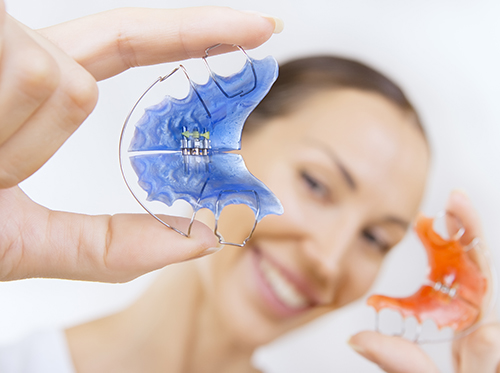
  • Hawley Retainers—the traditional removable retainer. This appliance uses wires embedded in a molded acrylic plate to keep your teeth properly aligned and to hold your retainer in place.
  • Clear Plastic Retainers—a removable custom retainer made of vacuum-formed plastic. This piece looks and fits over the teeth like a clear aligner.
  • Fixed Retainers—a small single wire bonded to the back of specific teeth to hold them in place and prevent any movement.

For the first few months, you might need to wear your removeable retainer both night and day, and then switch to nighttime wear. Roger Elton might recommend long-term nightly retainer use, or perhaps taper to a few nights a week. A fixed retainer can last for many years. We can’t tell you how long you’ll need to wear your retainer because that answer depends on your specific orthodontic needs.

If you do stop wearing your retainer and find that your teeth are shifting, see Roger Elton as soon as possible. Fixing a slight shift can be fairly uncomplicated, but waiting until your teeth and bite are more seriously out of alignment could require another session in braces or aligners.

The hard work you’ve put in to create your smile is past, and today you’re enjoying all the benefits of aligned teeth and a comfortable bite. Taking simple steps to maintain these benefits will help guarantee a future filled with healthy, confident smiles.

Post-Braces Care: Wear your retainer!

June 15th, 2023

Many patients underestimate the importance of wearing their retainers after their braces come off, but it is one of the most critical post care practices to keep your teeth in alignment. Why spend all that time, energy, and money to straighten your teeth when you don't plan to keep them straightened after treatment?

What is a retainer?

As the name implies, a retainer keeps teeth from moving back to the positions in which they started before treatment was administered; they "retain" your smile and bite. There are many different types of retainers—some are removable and some are permanent. Some retainers are made of plastic and metal (known as Hawley retainers) and others are all plastic or all metal. Some retainers can even be bonded to the back of your teeth!

How long do I need to wear it?

If you've been given a removable retainer by Roger Elton, you may be wondering how long you need to wear it. It takes time for the tissues and bones around your teeth to reorganize and set into place after braces treatment.

The amount of time you’ll need to wear your retainer depends on your unique situation, but typically, retainers should be worn at least as long as the time you spent in braces. You might need to wear them full-time for a while, and then transition to wearing them only at night. Roger Elton will have a treatment plan especially for you, and if you stick to it, you'll always have a straight smile.

Nothing is forever (at least without retainers!)

Research has shown that there is no “permanent” position for your teeth to remain in. In fact, some studies say upward of 70% of patients will see a change to their bite and tooth alignment as they get older. This applies to people who have had orthodontic treatment and those who have not. Of course, some people's teeth never seem to shift—you can consider them the lucky ones, as most people's teeth do.

And this is precisely where retainers come in. The only way to ensure your teeth stay in alignment long-term is by wearing your retainers. If you have any questions about retainers or your treatment plan, please ask any member of our Parker or Aurora, CO staff.

Don't forget your retainer this summer!

June 7th, 2023

As we start our summer, our team at Orthodontic Smilemaker wants to remind our patients who have completed treatment that it is very important to wear your retainer as prescribed even while away for vacations and summer camps.

If you are away from home and only wearing your retainer at night, here is a helpful tip: after removing and brushing your retainer in the morning, place it back in the case and then put it with your PJ’s or on your pillow. That way you have a reminder to put your retainer back in at night.

Remember, retainers should be worn every night, not just some nights.

We wish you safe travels and adventures this summer!

TMD Problems and How You Can Prevent Them

May 31st, 2023

Temporomandibular joint disorders (TMD) describe a set of conditions that involve trouble with your jaw and face muscles. They result from a problem in the temporomandibular joint (TMJ), which is a hinge that connects the temporal bones, in your skull in front of each ear, to your jaw. The joint enables you to talk, yawn, and chew by letting your mouth move.

TMD can be very painful and interfere with functions such as eating and speaking. This what to watch for and how to try to prevent TMD.

Risk Factors for TMD

You are at higher risk for TMD if you are a women than if you are male. The disorder is most common among adults between the ages of 20 and 40 years. Other risk factors for TMJ disorders include the following.

  • Arthritis in the area, making movement more difficult
  • Excessive tooth grinding, because it increases stress on the joint
  • General stress, which can lead you to clench your teeth and strain facial muscles

Symptoms of TMD

Symptoms of TMD can last for just a short while, or for several years. Seeing Roger Elton is important if your symptoms make it impossible for you to eat regularly or if you have unbearable pain or discomfort. The following symptoms can occur on both or one side of your face.

  • Aching or very tired facial muscles
  • Jaws that are fixed open or shut without you being able to unlock them
  • Grating or popping sounds when you chew or close or open your mouth
  • Pain in the entire area, including the mouth, jaw, neck, or shoulders, that comes on when you chew or yawn

Preventing TMD

You can try to prevent TMD by focusing on reducing risk factors. If you grind your teeth at night, ask Roger Elton about wearing a mouthguard. If you are overly stressed, look into ways to better manage your stress and relax your muscles. Another strategy for trying to prevent the development of TMD is to avoid chewing gum, since that puts stress on your jaw.

If you have questions about TMD, don’t hesitate to contact our Parker or Aurora, CO office.