Our Blog

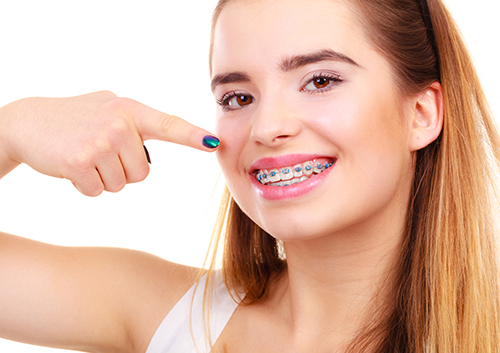
Eating with Braces: Braces-friendly snack recipe

September 23rd, 2020

At Orthodontic Smilemaker, Roger Elton and our staff know that eating with braces can be tricky. You want to avoid damaging the bands, brackets, and wires, since any damage can delay the progress of your treatment. After adjustments, your mouth may also feel sore, which will make eating more of a chore than a pleasure.

The good news is you do not have to avoid all of your favorite foods; there are ways you can still enjoy them. Try some of these ideas and recipes for great snacks that are friendly to your braces.

Fruits and Vegetables

You still need to eat fruits and vegetable for the healthy nutrients. The trick is to cut harder items into small pieces that you can chew easily with your back teeth. Canned fruits are also a great choice, but select fruits packed in water to avoid the heavy, sugary syrups. It’s a good idea to avoid excess sugar with braces, since sugar build-up around your braces can lead to plaque formation.

Single-serving packages are available to make your snack portable and convenient. Enjoy vegetables with a small amount of a healthy dip. Hummus or yogurt can be used for flavor without adding unnecessary fat or calories.

Banana and Honey Smoothie

Smoothies are a healthy treat, and you can create these drinks with your favorite ingredients. You can use a variety of yogurt types for your smoothie: regular, low or non-fat, and Greek are all great choices.  Here’s one of our favorite smoothie recipes:

  • 6 ounces of your choice of yogurt
  • 1 or 2 teaspoons of honey
  • 1 ripe banana
  • 6 ounces milk

Chop the banana into smaller pieces and put all your ingredients into a blender. Blend on low until everything is mixed and then blend on high for about 20 seconds to make your smoothie fluffy.

The great thing about this recipe is that you can substitute just about any small or cut-up fruit for the banana. Try blackberries, raspberries, or peaches for variety. Try to avoid fruits with small seeds; strawberries can leave bits stuck in your braces. You can even make a smoothie with peanut butter and jelly!

Please ask our team if you have any concerns regarding the foods you can safely eat while wearing braces.

Worst Candy for Braces

September 16th, 2020

Most kids love candy; actually, most people in general love candy. So when it comes time for you to get braces there can often be a natural conflict between candy consumption and maintaining the integrity of your braces. For that reason, Roger Elton and our team know that it’s good to know which types of candy are not good for your braces. To better illustrate, here are some candies that you will want to avoid.

Caramel

Caramel is a sweet and often exceedingly sticky and chewy type of candy that just does not mix well with braces. Caramel can cause a mess in regular teeth, but teeth with braces are a whole other story. The sticky candy can very easily get lodged and stuck between the teeth, gums, and braces, making for a difficult task of cleaning your mouth. And if your teeth don't get cleaned properly, cavities can easily form. If you get cavities while you have braces, that could mean additional appointments at our Parker or Aurora, CO office and an extended treatment time.

Salt Water Taffy

Another sticky and chewy candy to avoid with braces is salt water taffy. For many of the same reasons as caramel, it is best to avoid taffy until you get your braces removed. It may be a long wait, but when it comes to the health of your teeth, and the purpose of your braces, it really is best to avoid taffy.

Popcorn

Popcorn of any kind is best to avoid when you have braces. The kernels can easily do damage to the braces as you chomp on them, and they can get stuck between your teeth and the braces causing discomfort and further complications. In this sense it does not matter which flavor of candy popcorn you eat, all popcorn is bad news until you get your braces off.

Generally speaking, any candy that is chewy, crunchy, or sticky is not a good idea to eat with braces in your mouth. These types of candy will make life wearing braces much more difficult than if you were to just wait until your braces come off. With a little patience you will be back to eating all your favorite candy again, and with straightened teeth at that.

How to Floss with Braces

September 9th, 2020

The Orthodontic Smilemaker team knows that oral hygiene is important, whether you have braces on your teeth or not. But if you are a person who wears braces, caring for your teeth and gums can become somewhat challenging. Without daily oral hygiene practices, you may become prone to cavities and tooth decay during your time in braces.

Naturally, you know that brushing your teeth each morning and night, as well as after you eat, will help keep your mouth healthy and clean during the months you wear braces. But flossing is also an important part of your hygiene routine. Flossing with braces can be tricky, but it’s not impossible. Roger Elton, your general dentist, or your dental hygienist can help you become more comfortable and adept at flossing your teeth during the months you wear braces.

Flossing Tips for Those with Braces

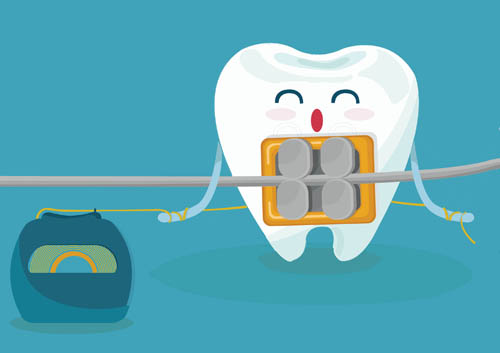
  • Use Tools Provided by Our Office. A floss threader is a small, plastic needle that will help you floss between the wires and your teeth. Thread a 12-to-18-inch piece of floss onto the needle, and use the needle to get the floss easily behind the wires.
  • Flossing Under the Wires. Once the floss is behind the wires, use your hands to manipulate the floss. Move it up and down along the wires to remove food particles.
  • Flossing Between Your Teeth. Floss between your teeth as you normally would without braces. Move the floss up and down between your teeth, using a clean section of floss for each tooth.
  • After You Finish Flossing. Your orthodontist may have suggested that you use a water pik or proxy brush after you finish brushing. Either of these tools will help remove any loosened food particles to ensure that your teeth and braces are clean.

Continue Good Oral Hygiene Habits

Good oral hygiene habits you use while wearing braces will help you achieve the beautiful smile you and the Orthodontic Smilemaker team have been working toward. Once your braces are off, it may be tempting to slack off on the brushing and flossing. Don’t let yourself fall into any habits that will have a negative impact on your oral health or the attractive smile you waited for throughout the months you wore braces. See your general dentist for regular cleanings, and continue to brush and floss your teeth each day.

Fantastic Elastics

August 26th, 2020

If you already wear traditional braces, you know all about these helpful little rubber rings. But if you are new to the world of braces, you might like to know just what kind of elastics are available and what they can do for you.

  • Ligatures: Alignment Assistance

When you get your braces, the brackets you’ve chosen will be bonded to your teeth. Once they are attached securely, an arch wire will be threaded through the brackets to provide consistent gentle pressure, moving your teeth into their best positions. But what holds that wire in place? This is where those tiny, colorful bands, called ligatures, come in. Fit snugly around the wire and the bracket, they keep the wire where it needs to be to move your teeth to a better alignment.

There are also ligatures call “c-chain ligatures,” or “power chains.” These tiny ligature bands are connected to each other, and fit across the brackets in one long strip. This design lets them not only hold your wires in place, but help move your teeth closer together at the same time. They come in a variety of sizes depending on the spacing of your teeth, and might be worn weeks or months as needed.

One thing to remember is that while ligatures are essential, they are not permanent! Every time you have your wires tightened or replaced, you can make this an opportunity to express your personality through your choice of bands. There is a wide variety of color choices available, so take advantage of it!

Show your school spirit by displaying your high school’s colors. Go orange and black for Halloween. Match your ligature tones to your go-to clothing colors. Or, go monochromatic. Match grey or silver bands to your brackets, or choose white or clear bands if you have ceramic brackets. (One word of caution—light colored ligatures can pick up stains from dark foods and drinks. On the other hand, they won’t be around that long!)

  • Rubber Bands: Building Better Bites

While ligatures are the colorful attention-getters in the elastics world, there are other bands that do very important work. When you have a malocclusion, or bad bite, your upper and lower jaws don’t fit together perfectly. We use rubber bands to align your bite correctly and carefully move it into the proper position. This is accomplished by attaching bands to tiny hooks on specially chosen brackets on the upper and lower teeth. The bands usually connect an upper bracket to a lower one, and are specifically placed to correct your unique bite problem.

If you need this type of elastic, you will play a very important part in making your orthodontic treatment work. You will probably need to wear your bands 24 hours a day, removing them only for brushing and flossing. (Talk to us about how to work with your bands when you are eating, playing an instrument, or wearing a mouthguard.) And they need to be replaced several times a day, which is where you come in.

Even if the bands look perfect, after hours of work, they lose the tightness needed to keep moving your teeth to their best position. Bands that are too loose won’t be as effective. On the other hand, doubling the bands is a bad idea because that might apply too much force. Bands come in a variety of sizes and strengths, and yours have been chosen for this specific phase of your treatment. Keep calm, keep to a schedule, and keep a supply of bands on hand in case one breaks, and everything will work out.

If this sounds like a lot of confusing information, don’t worry! Roger Elton will supply you with the right bands for your treatment, clear instructions on where and how to place them, and practice time for putting them in. You’ll probably need a mirror at first, but you’ll become an expert in no time.

If you ever have questions we can help you with, contact our Parker or Aurora, CO office immediately. We are here to guide you through the process and help you with any problems you might have. Wearing your bands consistently and correctly will help you achieve your beautiful smile in the shortest time possible. And that’s an accomplishment that is truly fantastic!